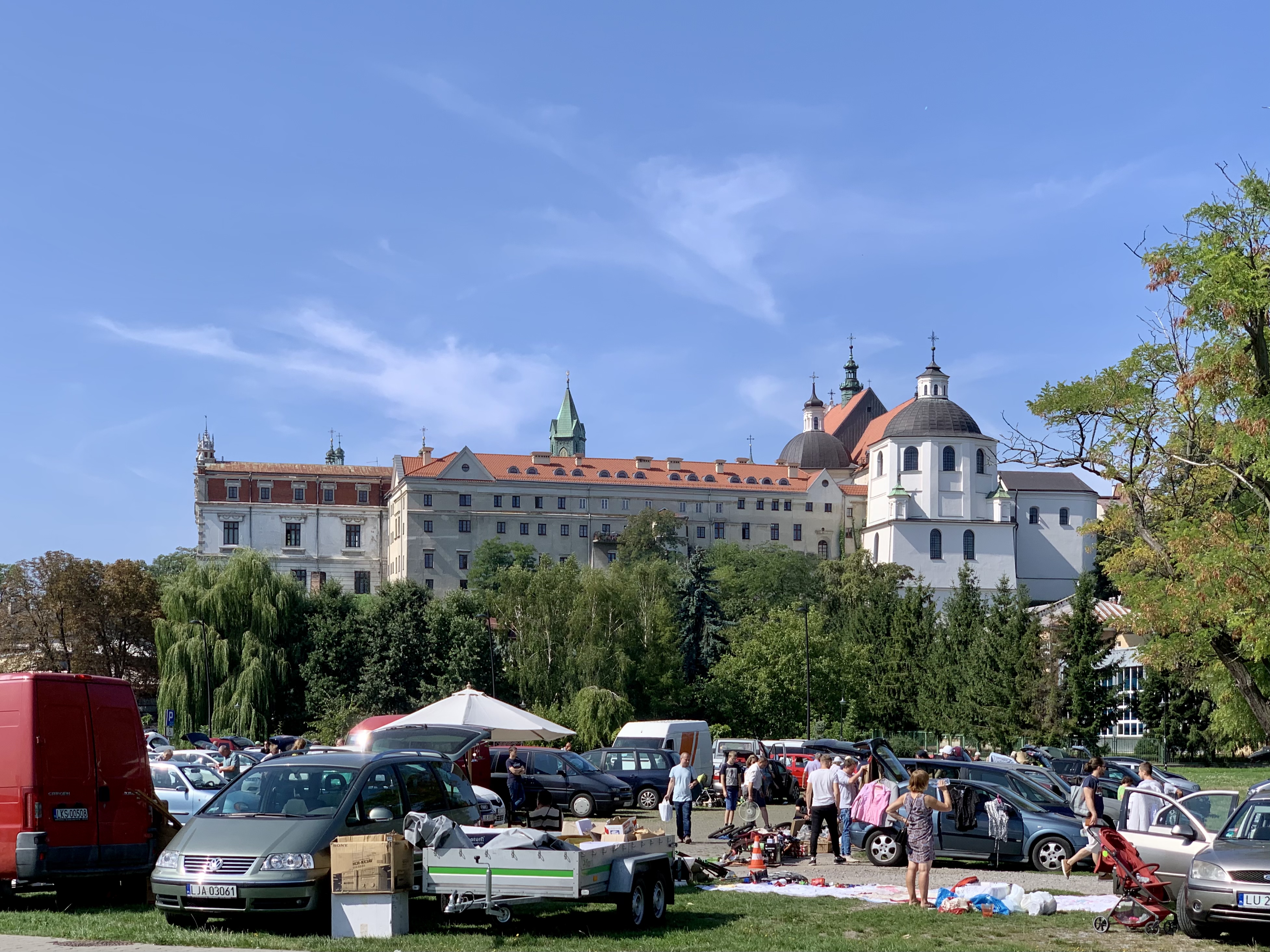
How Rural Markets Work in Poland
Village fairs and weekly open-air markets have been a fixture of rural life in Poland for centuries. Today they operate within a defined administrative framework, with licences issued at commune level, physical infrastructure provided or managed by local authorities, and a mix of farmers, artisans, and small traders occupying the stalls. The practical details differ between regions, but the underlying structure is broadly consistent across the country.
Who Organises a Rural Fair
In the legal sense, a market (targ) is most commonly organised by the commune (gmina) or by a dedicated municipal enterprise operating on behalf of local government. The legal basis lies in the Act on Municipal Self-Government of 8 March 1990, which assigns communes responsibility for local trade infrastructure. Some larger markets are managed by private operators holding long-term concessions from the commune.
The organiser is responsible for designating the market area, setting and collecting fees from vendors, maintaining the site to the standards required by sanitary and fire regulations, and ensuring that vendors hold the documents required for the type of goods they sell.
Permits and Authorisations
A vendor at a rural market does not typically need a separate trading licence just to sell agricultural produce at a public fair, provided the market itself has the appropriate permit from the local authority. What matters is the nature of the goods:
- Unprocessed fruit and vegetables grown on the seller's own land can be sold without a business registration, as long as the seller meets the conditions of the Rolniczy Handel Detaliczny (RHD) framework or operates below the threshold for business activity.
- Processed foods — jams, cured meats, dairy, bakery goods — require the seller to be registered with the relevant sanitary inspection authority (Inspekcja Sanitarna) or veterinary authority (Inspekcja Weterynaryjna), depending on the product category.
- Non-food goods require standard rules on consumer protection and, for certain product types, CE marking or other conformity documentation.
Stall Assignment and Fees
Markets in Poland typically allocate stall spaces on one of two bases: a permanent assignment for the season, which may require a written agreement with the organiser, or a first-come, first-served arrangement on the day. Many established markets operate a hybrid: certain locations are permanently assigned to vendors who have been present for years, while peripheral spots are available to occasional traders.
Daily pitch fees vary considerably. At a small commune market in rural Mazovia or Lublin region, the fee for a standard 3-metre pitch might be between 15 and 30 PLN. Larger urban markets — including the well-known Targ pod Zamkiem in Lublin or markets on the main squares of Nowy Targ — charge more, particularly for covered stalls.
Under Polish law, communes have the power to set their own market fees. The fee schedule is adopted by the commune council as a local resolution and must be publicly available.
Sanitary Requirements
The Chief Sanitary Inspectorate (Główny Inspektor Sanitarny) issues guidance on the conditions that must be met at food markets. Key requirements include:
- Adequate separation between food and non-food stalls
- Access to potable water and hand-washing facilities
- Temperature control for products that require it (meat, dairy, fish)
- Proper waste collection infrastructure
- Pest control measures in and around the market area
In practice, enforcement at small rural markets is less intensive than at urban food halls, but periodic inspections by the sanitary authority do occur, particularly in the spring and summer seasons when market activity peaks.
Seasonal Patterns and Fair Calendars
Weekly markets typically operate year-round, though footfall drops significantly in winter. Seasonal fairs — often linked to harvest festivals, local saints' days, or regional agricultural exhibitions — attract larger crowds and a wider range of vendors, including producers from outside the immediate area.
The fair calendar for each voivodeship is not centralised in a single official database. Regional agricultural advisory centres (Ośrodki Doradztwa Rolniczego, ODR) maintain partial lists for their areas. The Ministry of Agriculture publishes general information on agricultural fairs at the national level.
The Role of Agricultural Cooperatives
Producer groups and agricultural cooperatives sometimes coordinate collective attendance at rural markets, particularly for small farms that produce insufficient volume to justify individual stalls. In this model, the cooperative holds a single stall and sells produce from multiple member farms, handling the labelling and documentation centrally. This arrangement is permitted under Polish cooperative law, though it requires the cooperative to be registered with the relevant authorities for any processed products it handles.


